Our questions

Here we collect information about the issues that NPG is pursuing, to simplify everyday life for our members, help them do better business, as well as to protect consumers and guide them to more sustainable choices.

Industry terms

NPG is constantly working for a competitive industry and fair business conditions. We also protect consumer rights and the relationship between our members, their customers and the end consumer.

Therefore, in close collaboration with Swedish authorities, we have developed industry terms and conditions for our member companies. The consumer terms, which include a 1-year warranty, have been specially developed together with the Swedish Consumer Agency.

Statistics

NPG produces detailed sales statistics for electric hand tools, cordless hand tools and nail guns as well as park and garden products for both Sweden and the Nordic region. The statistics show the number of units sold and price, which gives a clear picture of market development.

NPG and its member companies therefore have a very good overview of trends and market changes.

Would you like to see the statistics? Become a member today!

Environment and sustainability

NPG and its member companies see it as a minimum requirement to comply with applicable legislation, regulations and other environmental requirements.  

In their daily work, member companies therefore strive to use materials and methods that are environmentally friendly, and to stay informed about news and improvements on the market. We also take responsibility for ensuring that used electrical and electronic products from our operations are collected and disposed of in an environmentally sound manner, and that environmentally hazardous waste is handled with the utmost care to eliminate risks to humans and the environment.

NPG was one of the driving parties behind the establishment of Electric Circuit, and today all member companies are connected.


Producer responsibility

Producer responsibility applies to virtually all products that are powered by a cord or battery. Accessories are also covered, such as sockets, keyboards and remote controls. There are some exceptions, including products intended to be sent into space, military equipment, implants and medical devices that are expected to be infectious, large fixed installations, vehicles and other mobile machines.

Producer Responsibility Regulation

RoHS and REACH

NPG companies have worked for a long time on product development and environmental work, meaning that the products are continuously improved from an environmental point of view and that the industry now complies with the RoHS and REACH directives.

Read more at El-kretsen

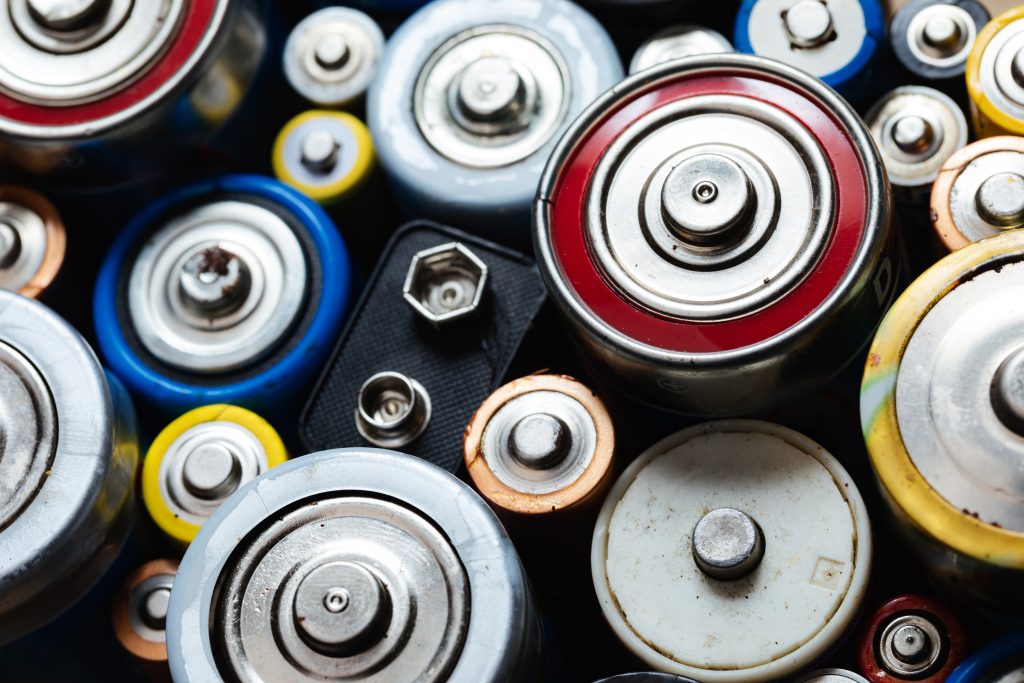
Battery issues

NPG companies are continuously working on product development of batteries and today almost exclusively use lithium batteries.
According to the Battery Ordinance, all batteries must be labeled and collected.

The collection is currently taking place through El-Kretsen.

The new battery regulation

Consumer law

Consumer rights are regulated in the Consumer Purchase Act (KKL) and the Consumer Services Act (KTL), both of which are mandatory, i.e. the seller cannot agree on worse terms. The laws are based on the principle that original defects, i.e. defects that can be assumed to have existed at the time of purchase, must be reported no later than two months after they are discovered, but no later than three years. 

For the first six months, the seller has the burden of proof that the defect was not original and therefore should not be remedied at the seller's expense. Examples of such defects are incorrect handling and external damage.

In Sweden, buyers of household appliances are offered a one-year warranty according to the provisions of NPG Konsumentköp 2005. After this year, it is always the buyer who must prove that the fault is original. 

The remedy for an established original defect is repair or replacement, i.e. replacement. Repair is always carried out if this can be done without major inconvenience to the buyer and is economically advantageous. General Complaints Board handles cases where buyers and sellers cannot agree.